The storm test: what your home reveals in silence

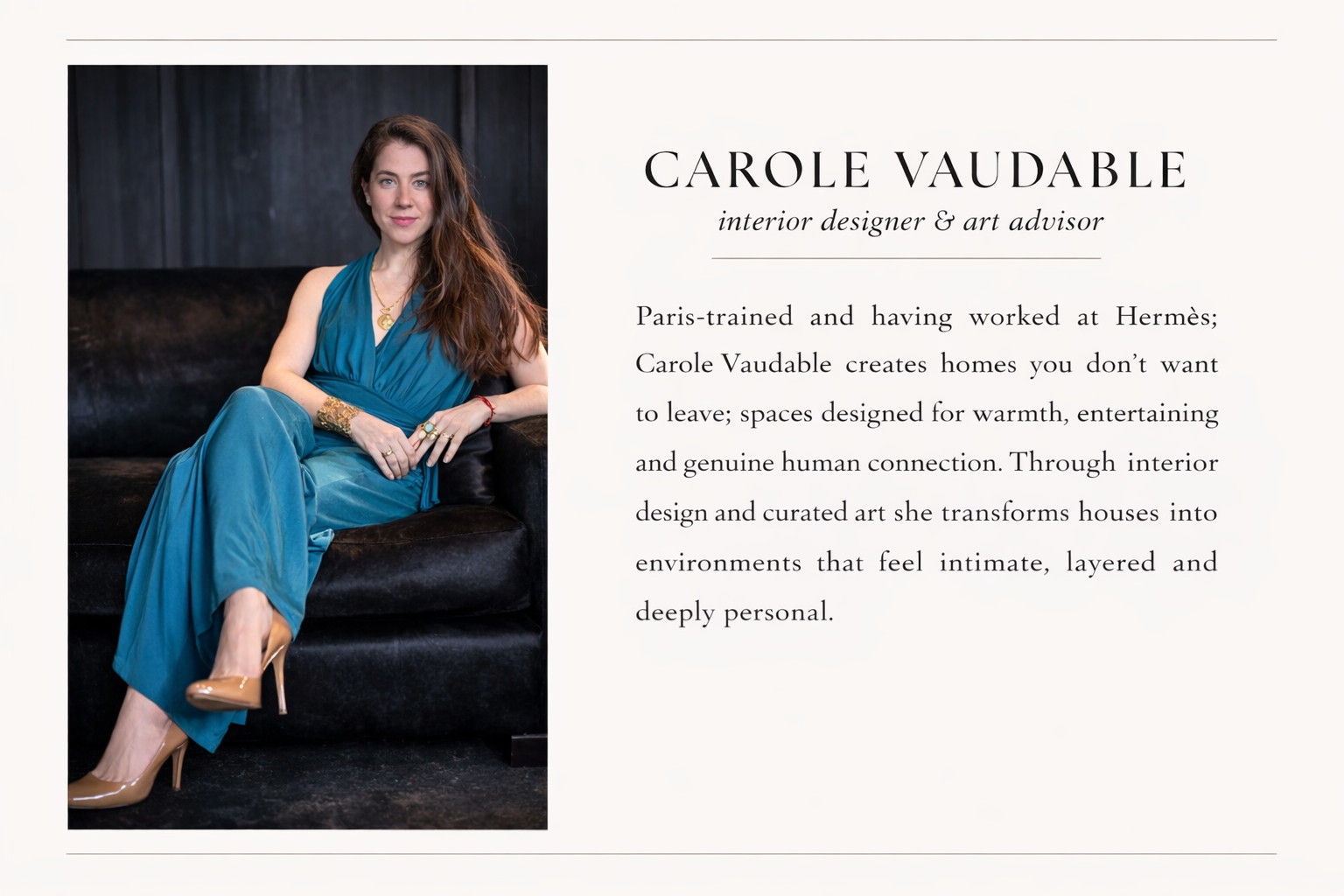
Carole Vaudable, interior designer, after the Feb 2026 blizzard in New York
If New York shut down tomorrow and you couldn’t leave your home for three days… would it feel like a sanctuary or a trap?
In summary
• snowstorms reveal whether your home regulates you or amplifies your stress
• beautiful and expensive does not automatically mean calming
• lighting, acoustics, layout, and fire directly affect your nervous system
• a well-designed home holds you differently when the city goes silent
Every winter, the same thing happens. The forecast announces a snowstorm, the city panics, grocery stores empty out and then suddenly silence. No traffic, no sirens, no distractions. Just you and your space. And that’s when the truth comes out.
the storm as a psychological stress test
As an interior designer living in New York, I pay attention to storm days. They’re psychological stress tests. When you’re forced inside, your nervous system has nowhere to escape. The space either regulates you or amplifies everything you’ve been avoiding.
I’ve seen it over and over.
when “beautiful” isn’t regulating
A doctor in Tribeca reached out to me after a blizzard two winters ago and said, “I don’t understand, my apartment is beautiful… so why did I feel anxious all weekend?”
Her apartment was objectively “done”: expensive sofa, neutral palette, clean lines. But when I walked in, I felt it immediately: hard surfaces everywhere. Overhead lighting only, no softness, no layered warmth. The layout pushed everything against the walls, leaving a hollow center that felt more like a waiting room than a home.
On a normal week, she was never there long enough to notice. But during the storm, with nowhere to go and a very active mind, the space felt cold, not visually but physiologically.
designing for physiology, not photography
So I redesigned it for storm days. We introduced depth: a large wool rug that absorbed sound. Table lamps at eye level to lower cortisol in the evenings. A reading chair angled toward the window instead of the television. Drapes that actually framed the winter light instead of exposing it. Richer tones, not dramatic, just grounding. The layout shifted inward, creating a conversational center instead of empty perimeter space.
the fireplace effect
We rehabilitated the fireplace. And with a fireplace who needs to go anywhere. Science shows it: viewing flames in a fireplace lowers blood pressure within minutes, heart rate variability improves when watching real fire vs. a blank screen and people report higher relaxation levels with crackling audio combined with flame visuals. *
The next snowstorm, she texted me a photo. Fireplace on, book open, no anxiety.
when the city goes quiet, your space gets loud
That’s the difference. Storm days reveal what your home really is. When the city goes quiet, your space gets louder. Lighting becomes emotional, acoustics become psychological, proportion becomes physical. If your environment is too stark, too exposed, too unfinished, your nervous system stays on alert.
i design for the 48 hours you can’t leave
I don’t design for Instagram moments. I design for the 48 hours you can’t leave.
A well-designed home holds you differently when the world outside feels suspended. It slows your breathing, softens sound, creates zones so your brain can shift from work to rest without leaving the room. It feels contained but never confined.
That’s the storm test.
sanctuary or trap?
If New York shut down tomorrow, would your home help you reset or would it quietly increase your stress? If you’re not sure, it might be time we look at it together. Because the real measure of a great interior isn’t how it photographs on a sunny day. It’s how it holds you when the city goes silent.
*“Fireside Relaxation: Hearth and Health” (2014), Researchers: Christopher D. Lynn et al., Published in: Evolutionary Psychology.Written by Carole Vaudable, interior designer.